Artificial intelligence is changing how digital characters are created, presented, and managed online. An AI influencer is a computer-generated personality that can appear in images, videos, social media posts, or other digital content. Some are completely fictional, while others are designed to resemble realistic human creators.
Virtual influencers existed before modern generative AI, but newer AI tools have made it easier to create realistic images, voices, animations, and written content. This has expanded interest in AI content creation, virtual personalities, and automated social media workflows.
An AI influencer normally combines several technologies:
- Generative AI for images, text, and creative concepts
- Computer-generated characters or digital avatars
- AI voice generation for spoken content
- Animation and video-generation technology
- Natural language processing for written communication
- Social media management and content planning tools
The basic idea is simple: software creates or assists with content around a fictional digital personality. Human teams may still define the character, review content, manage accounts, and make editorial decisions.
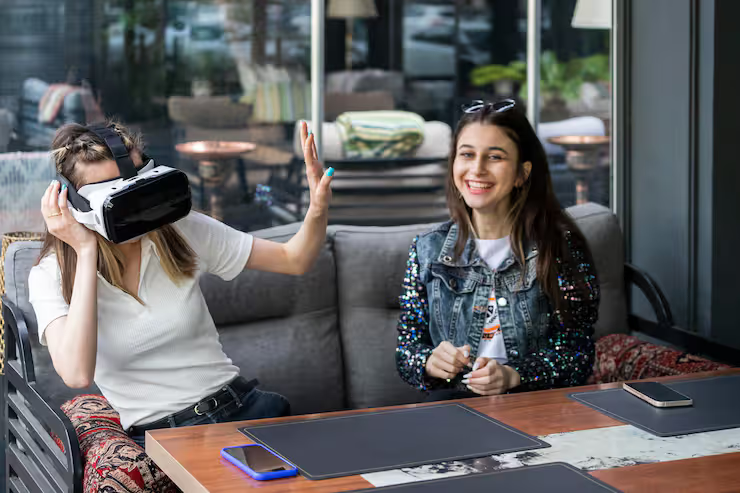
How an AI Influencer Works
The process generally begins with a character concept. Developers or creators establish the virtual personality's appearance, interests, communication style, and fictional background.
AI image-generation systems can then create visual material that maintains a similar character appearance across different scenes. Other systems can generate scripts, captions, voice tracks, or animations.
A typical workflow may look like this:
| Stage | What Happens |
|---|---|
| Character design | Appearance and personality are established |
| Content planning | Topics and formats are selected |
| AI generation | Images, text, audio, or video are produced |
| Human review | Content is checked for accuracy and suitability |
| Publishing | Approved material is posted on digital platforms |
| Audience analysis | Engagement and audience responses are reviewed |
The level of automation differs. Some virtual creators are heavily automated, while others depend on substantial human creative direction.
Why AI Influencers Matter Today
Virtual creators are becoming relevant because social media increasingly combines entertainment, storytelling, artificial intelligence, and digital identity.
For audiences, the main difference is that a virtual influencer does not have a conventional human identity behind every piece of content. This can create new forms of storytelling while also raising questions about authenticity and transparency.
For creators and digital media teams, AI influencers can demonstrate how generative AI is changing content production. They can also provide examples of how computer-generated characters can maintain a consistent visual identity.
Who Is Affected?
Several groups may encounter AI influencers:
- Social media audiences
- Digital creators
- Advertising professionals
- Technology developers
- Media organizations
- Educators and researchers
- Regulators and consumer-protection authorities
- Platforms that host AI-generated content
The topic is particularly important where realistic digital characters could be mistaken for real people.
Problems the Technology Can Address
AI-assisted virtual creators can help explore several practical challenges in digital media, including:
- Creating consistent fictional characters
- Producing visual storytelling at scale
- Testing different creative concepts
- Developing educational digital characters
- Supporting interactive entertainment
- Exploring new forms of social media communication
However, the technology does not automatically make content accurate or trustworthy. Human review remains important, especially when content discusses health, finance, public affairs, or other areas where inaccurate information could cause harm.
Recent Developments in AI Influencers
The past year has brought greater attention to AI transparency, synthetic media, and the identification of computer-generated content.
On June 10, 2026, the European Commission published its final Code of Practice on marking and labelling AI-generated content. The code supports implementation of transparency requirements under the EU AI Act.
On July 20, 2026, the European Commission published guidelines explaining the scope of Article 50 transparency obligations. These rules began applying on August 2, 2026, with requirements covering areas such as AI-generated or manipulated content and deepfakes.
This development is significant for virtual influencers because highly realistic AI-generated characters can sometimes resemble real people. Under the EU framework, certain deepfake content must be clearly disclosed, helping audiences understand when material has been artificially generated or manipulated.
In the United States, the Federal Trade Commission continues to apply consumer-protection principles to influencer advertising. Its guidance states that material relationships connected with endorsements should be clearly disclosed, and disclosures should be easy for audiences to notice and understand.
These developments show a broader movement toward AI transparency, responsible digital marketing, and clearer identification of synthetic media.
Rules and Policies for AI Influencers in India
In India, influencer advertising is affected by the Advertising Standards Council of India (ASCI) guidelines. ASCI specifically recognizes virtual influencers as fictional computer-generated people or avatars designed with realistic human characteristics, features, and personalities.
One important requirement is that a virtual influencer should make it clear to consumers that they are not interacting with a real human being. The disclosure should be upfront and prominent.
Influencer advertising also requires appropriate disclosure when there is a material connection with an advertiser. ASCI provides disclosure labels such as “Advertisement,” “Ad,” “Sponsored,” “Collaboration,” and “Partnership,” depending on the circumstances.
ASCI's broader advertising code also addresses misleading or harmful advertising practices. Its guidelines are part of India's self-regulatory advertising framework.
For anyone creating or managing an AI influencer in India, useful principles include:
- Clearly identify the character as virtual or AI-generated.
- Do not present fictional experiences as real personal experiences.
- Use appropriate advertising disclosures when applicable.
- Avoid deceptive representations about products, people, or events.
- Review AI-generated claims before publication.
- Consider privacy, intellectual property, and impersonation risks.
Rules can vary by country and platform, so international campaigns may need additional review.
Tools and Resources for Understanding Virtual Creators
AI influencer workflows can involve several categories of technology. The appropriate tool depends on whether the goal is character design, writing, image generation, animation, voice creation, or content verification.
Useful Tool Categories
| Category | Main Purpose |
| Generative AI | Creates or assists with text and creative concepts |
| AI image tools | Develops character images and visual scenes |
| AI video tools | Creates animation and video content |
| Voice-generation tools | Produces synthetic speech |
| Avatar platforms | Creates talking or animated digital characters |
| Content-management tools | Organizes publishing schedules |
| Deepfake detection tools | Helps examine potentially manipulated media |
| Analytics platforms | Measures audience interaction and content performance |
When evaluating an AI content tool, consider transparency features, content ownership terms, privacy practices, watermarking or metadata capabilities, and available controls for responsible use.
The European Commission's AI transparency resources are particularly useful for understanding current European requirements around AI-generated content.
The ASCI influencer advertising guidelines are useful for understanding virtual influencer disclosure expectations in India.
The FTC's influencer disclosure guidance provides another useful reference for audiences and creators dealing with U.S.-connected advertising activity.
Frequently Asked Questions About AI Influencers
What is an AI influencer?
An AI influencer is a fictional or computer-generated digital personality that publishes content or interacts with audiences through online platforms. It may use AI-generated images, text, voices, animation, or a combination of these technologies.
Are AI influencers real people?
Generally, no. A virtual influencer is a computer-generated character rather than a human individual. In some cases, humans create and manage the character, but the personality represented online is fictional.
How are AI influencer images created?
AI image-generation technology can create characters from written descriptions, reference images, or other inputs. More advanced workflows use character consistency techniques so that the same virtual personality appears across multiple scenes.
Do AI influencers need to disclose that they are virtual?
Requirements depend on the country, platform, and type of content. In India, ASCI's guidelines specifically state that virtual influencers should clearly disclose that consumers are not interacting with a real human being.
In the European Union, transparency requirements under Article 50 of the AI Act include specific obligations concerning certain AI-generated or manipulated content, including deepfakes.
Can AI influencers replace human creators?
AI influencers are better understood as a different type of digital media format rather than a direct replacement for human creators. Human judgment remains important for creative direction, factual review, ethical decisions, audience communication, and regulatory compliance.
The Future of Virtual Creators
AI influencers represent the intersection of artificial intelligence, social media marketing, digital avatars, generative AI, and synthetic media. Their development shows how digital characters can become more realistic, interactive, and consistent.
At the same time, greater realism increases the importance of transparency. Audiences need to understand whether they are viewing a human creator, a fictional character, or AI-generated material.
The direction of the technology will likely depend on both technical progress and evolving rules. Better content labelling, human oversight, responsible AI practices, and clearer disclosure can help audiences distinguish fictional digital personalities from real people.
AI influencers therefore provide an important example of how generative AI is changing digital communication. Their future is likely to involve a balance between creative possibilities, audience trust, transparency, and responsible use.